Category: Без категорії
Agreement on new rules for carbon credits under the auspices of the UN
The United Nations has adopted key standards for a new carbon credit system under the Paris Agreement — Paris Agreement Crediting Mechanism (PACM). This system allows countries and businesses to generate high-quality credits for reducing emissions, contributing to the global fight against climate change.
Two main standards were approved as part of the agreed rules:
- Baseline standard — it requires setting an initial emissions level below “business as usual” (minus 10% at the start and minus 1% annually), which incentivizes a continuous increase in the ambition of projects.
- Standard for combating emission transfer (leakage) — it requires that projects stop the possible transfer of emissions to other regions and, in particular, that REDD+ initiatives be linked to the national strategic documents of host countries.
In addition, a decision was made on the equitable distribution of benefits for host countries, and training and support programs for such countries were introduced. Standardized approaches to retrofitting “kitchen” projects (e.g., stove retrofitting) in accordance with the latest technological data.
“This was an extremely important approach. We have finally adopted an innovative solution that ensures a consistent level of crediting on the path to carbon neutrality, through minimal reduction of crediting levels over time” — said Martin Geschen, Chairman of the PACM Supervisory Board.
These solutions pave the way for the launch of the first methodologies and project registration by the end of the year, and the system itself can become a powerful tool for strengthening climate ambition and attracting investments in emission reductions from 2026.
400;”>Source: https://unfccc.int/news/key-rules-agreed-for-credible-climate-project-crediting-under-un-carbon-market?utm_source=chatgpt.com
The Institute of Ecological Restoration and Development will be established in Ukraine
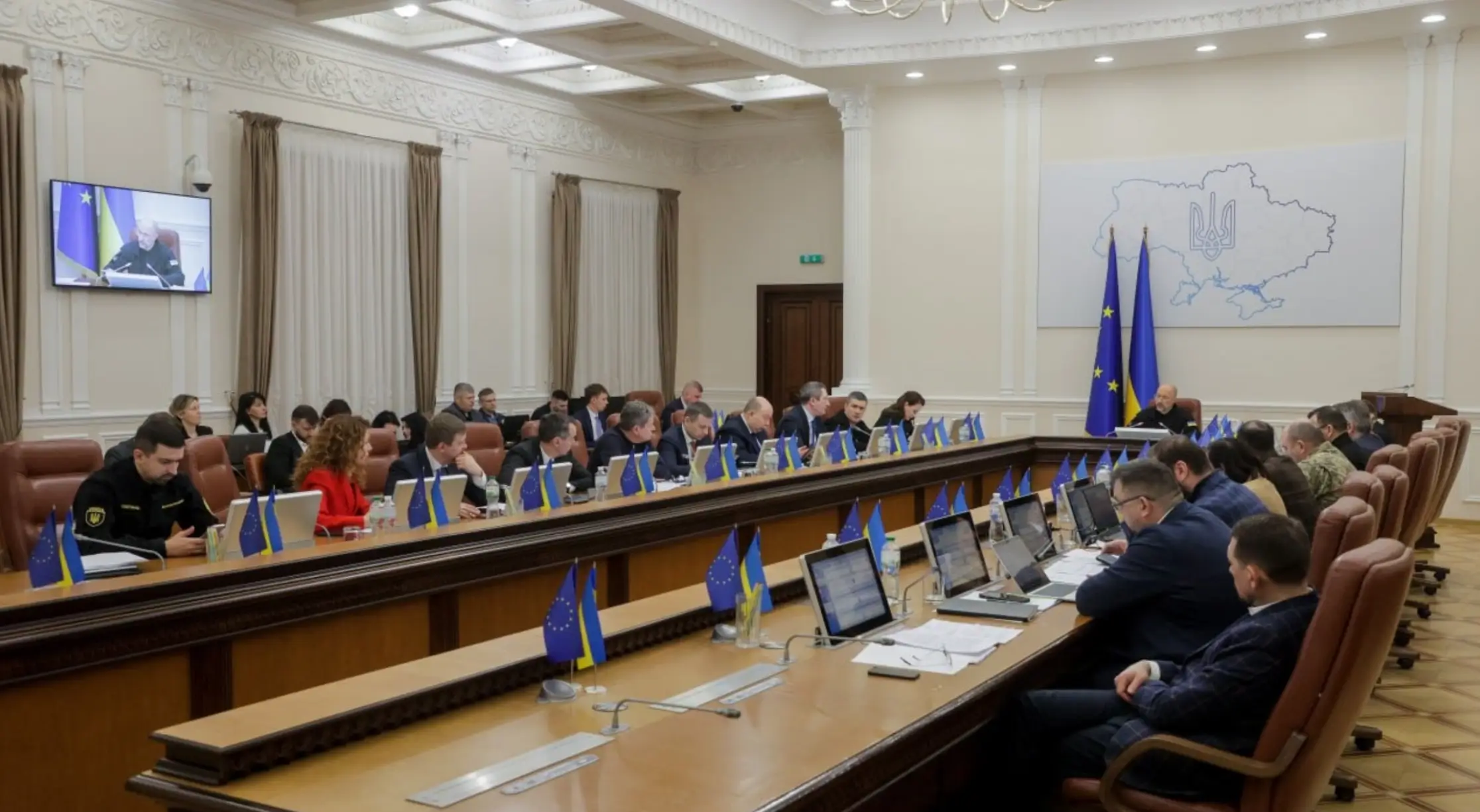
The Cabinet of Ministers of Ukraine has approved the creation of the Institute of Ecological Restoration and Development of Ukraine, the first state institution that will systematically study environmental challenges associated with the post-war period.
The new institute is being formed by merging the State Ecological Academy of Postgraduate Education and Management and the Center for Advanced Training of Water Management Workers. This will allow preserving the scientific and pedagogical potential of both institutions, optimizing the personnel structure, and rationally using budget resources.
Working under the auspices of the Ministry of Environment, the institute will focus on studying the environmental consequences of the war and developing solutions for sustainable and environmentally responsible restoration of the country. The institution will conduct fundamental and applied scientific research, train scientific personnel and improve the skills of specialists in the field of ecology.
This decision is an important step towards implementing the provisions of the Ecological Treaty for Ukraine. Post-war reconstruction should be based on scientific approaches and ecological principles.
“The reconstruction of Ukraine should be not only rapid, but also environmentally responsible. The creation of the Institute of Ecological Restoration and Development is a strategic step that will allow for the systematic study of the consequences of the military impact on the environment and the search for effective solutions for its restoration. This institution will become a key scientific platform for the formation of environmental policy in the post-war period,” says Minister Svitlana Hrynchuk.
EU leads large-scale ocean protection: ratification of the International Waters Treaty
The European Union, together with six Member States – Cyprus, Finland, Hungary, Latvia, Portugal and Slovenia – officially ratified the High Seas Treatyon 28 May 2025. This UN-backed agreement lays the foundation for the conservation of marine biodiversity in areas beyond national jurisdiction – covering almost two-thirds of the world’s oceans.
With this step, the number of signatory countries has now reached 28, making it the largest simultaneous ratification of such a treaty. The EU calls on other participants to join as soon as possible in order to reach the required quota of 60 ratifications for entry into force – it is expected that this could happen as early as the summer.
The EU also announced the allocation of €40 million to support countries in the African, Caribbean and Pacific region to accelerate the implementation of the Treaty. The overall effort aims to create a network of protected areas to ensure that at least 30% of the oceans are protected by 2030.
“Today, the European Union is taking a historic step towards protecting the oceans and preserving the fragile balance of ecosystems,” said Costas Cadiz, Commissioner for Fisheries and Oceans.
This agreement paves the way for the introduction of marine reserves in international waters, which significantly changes the approach to protecting the oceans and provides an effective mechanism for preserving the planet’s ecological wealth.